
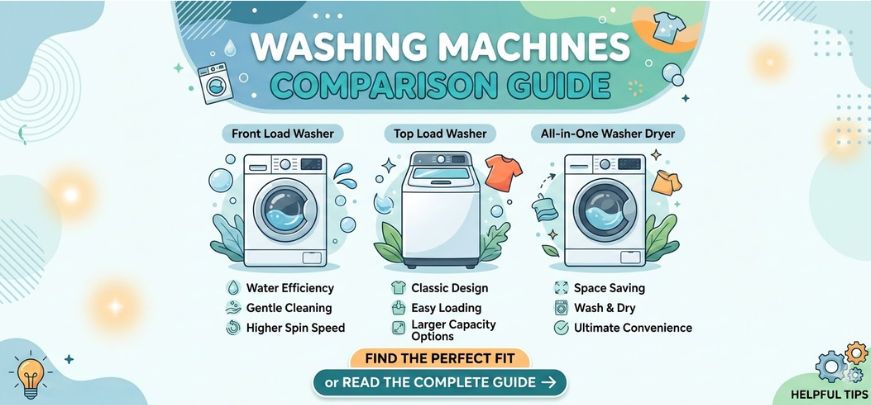
Washing Machines Comparison Guide: The Ultimate 2026 Buyer’s Handbook for Smart, Efficient & High-Performance Laundry Solutions
In today’s fast-paced households, a washing machine is no longer a luxury—it is a core home appliance that defines convenience, hygiene, and efficiency. As technology evolves rapidly in 2026, modern washers are equipped with AI-driven wash cycles, inverter motors, steam sanitation, smart connectivity, and energy-saving systems that dramatically enhance performance while reducing utility costs.
In this comprehensive Washing Machines Comparison Guide, we present a detailed breakdown of front load vs top load washers, fully automatic vs semi-automatic models, energy efficiency ratings, capacity selection, smart features, maintenance requirements, and long-term value analysis. Our objective is simple: to help you choose the best washing machine for your needs with precision and confidence.
Front Load vs Top Load Washing Machines: Detailed Comparison
Front Load Washing Machines

Front load washing machines are engineered for superior cleaning efficiency and water conservation. They operate using a horizontal drum that tumbles clothes gently through a small volume of water.
Key Advantages
-
Excellent stain removal performance
-
Low water consumption
-
Lower electricity usage
-
Gentle on delicate fabrics
-
High spin speeds for faster drying
Considerations
-
Higher upfront cost
-
Longer wash cycles
-
Requires bending to load/unload (unless pedestal installed)
Front load washers are ideal for households seeking premium performance, energy efficiency, and long-term savings.
Top Load Washing Machines

Top load washing machines offer ease of use and shorter wash cycles, making them popular in many households.
Key Advantages
-
Affordable pricing
-
Faster wash cycles
-
Easy loading without bending
-
Lower maintenance complexity
Considerations
-
Higher water usage
-
Slightly lower energy efficiency compared to front load
-
More wear on fabrics (agitator models)
Top load machines are suitable for families prioritizing convenience and budget-friendliness.
Fully Automatic vs Semi-Automatic Washing Machines
| Feature | Fully Automatic | Semi-Automatic |
|---|---|---|
| Human Intervention | Minimal | Required |
| Water Filling | Automatic | Manual |
| Wash + Spin | Single Drum | Separate Tubs |
| Energy Efficiency | High | Moderate |
| Convenience Level | Premium | Basic |
| Ideal For | Busy families | Budget users |
Fully automatic washing machines provide seamless operation with pre-programmed cycles, while semi-automatic washers offer affordability and manual control.
Washing Machine Capacity Guide (Kg Selection Explained)
Choosing the right capacity ensures optimal cleaning performance and efficiency.
| Household Size | Recommended Capacity |
|---|---|
| 1–2 Members | 6 – 7 kg |
| 3–4 Members | 7 – 8 kg |
| 5–6 Members | 8 – 9 kg |
| Large Families | 10 kg and above |
Selecting the correct drum size prevents overloading, excessive wear, and inefficient washing cycles.
Energy Efficiency & Inverter Technology
Modern washing machines feature Inverter Motors that adjust power consumption based on load weight. Benefits include:
-
Lower electricity bills
-
Reduced vibration and noise
-
Longer motor lifespan
-
Enhanced durability
Look for high energy star ratings to ensure maximum savings over time.
Smart Washing Machines: AI & Wi-Fi Connectivity
The integration of AI-powered washing systems has transformed laundry care. Smart washers now offer:
-
Wi-Fi app control
-
Remote cycle start/stop
-
Load sensing automation
-
Auto detergent dispensing
-
Voice assistant integration
-
Diagnostic alerts
These features enhance convenience while optimizing water and energy usage.
Steam Wash Technology: Hygiene & Allergen Removal
Steam wash systems eliminate:
-
99.9% bacteria
-
Allergens
-
Dust mites
-
Odor-causing microbes
This feature is essential for families with children, elderly members, or allergy-sensitive individuals.
Direct Drive vs Belt Drive Motors
| Motor Type | Advantages | Noise Level | Durability |
|---|---|---|---|
| Direct Drive | Fewer moving parts | Very Low | High |
| Belt Drive | Affordable | Moderate | Standard |
Direct drive motors offer quieter operation and improved longevity.
Water Consumption Comparison
Front load machines use approximately 40–60% less water than traditional top load washers. If water conservation is a priority, front load models are the superior option.
Spin Speed (RPM) Explained
Spin speed determines how dry clothes are after washing.
-
800 RPM: Basic drying
-
1000–1200 RPM: Standard household use
-
1400+ RPM: Faster drying, ideal for heavy fabrics
Higher RPM reduces drying time significantly.
Build Quality & Drum Material
Look for:
-
Stainless steel drums (durable & rust-resistant)
-
Anti-vibration design
-
Tempered glass lids
-
Rust-proof outer body
Premium materials extend machine lifespan.
Noise Levels & Vibration Control
Modern washers include:
-
Anti-vibration pads
-
Balanced drum technology
-
Silent inverter motors
Ideal noise levels range between 50–60 dB during wash cycles.
Washing Programs & Customization
Advanced models offer:
-
Quick wash (15–30 minutes)
-
Delicate fabric mode
-
Heavy-duty wash
-
Eco wash
-
Baby care cycle
-
Wool cycle
-
Bedding mode
Multiple programs ensure fabric-specific care.
Maintenance & Longevity Tips
To maximize lifespan:
-
Clean lint filters regularly
-
Use recommended detergent
-
Avoid overloading
-
Run drum cleaning cycle monthly
-
Keep door open after wash
Proper maintenance ensures 10–15 years of reliable performance.
Price Comparison by Category
| Type | Price Range | Best For |
|---|---|---|
| Semi-Automatic | Budget | Basic washing |
| Top Load Automatic | Mid-Range | Convenience |
| Front Load | Premium | Efficiency & Performance |
| Smart AI Washer | High-End | Smart Homes |
Best Use Cases by Household Type
-
Apartments: Compact front load
-
Large homes: 9kg+ smart washer
-
Budget homes: Semi-automatic
-
Eco-conscious buyers: High star inverter model
Long-Term Cost Analysis
While front load machines may cost more initially, they save significantly on:
-
Electricity
-
Water
-
Detergent usage
-
Maintenance repairs
Over 5 years, savings often offset the initial purchase price.
Installation & Space Requirements
Ensure:
-
Adequate water inlet/outlet
-
Proper ventilation
-
2–3 inches side clearance
-
Stable flooring surface
Front load washers require slightly more installation precision.
Warranty & After-Sales Support
Look for:
-
2-year comprehensive warranty
-
10-year motor warranty
-
Nationwide service network
-
Easy spare part availability
Warranty coverage reflects manufacturer confidence.
Advanced Safety Features
Modern washers include:
-
Child lock
-
Auto power-off
-
Overflow protection
-
Voltage protection
-
Door lock during operation
These ensure safe operation in households with children.
Washing Machine Comparison Summary Table
| Feature | Front Load | Top Load | Semi-Automatic |
|---|---|---|---|
| Cleaning Quality | Excellent | Good | Moderate |
| Water Efficiency | High | Moderate | Low |
| Energy Efficiency | High | Moderate | Moderate |
| Price | High | Medium | Low |
| Automation | Full | Full | Partial |
| Maintenance | Moderate | Easy | Easy |
Final Verdict: Which Washing Machine Should You Buy?
If you seek maximum efficiency, advanced cleaning, and long-term savings, choose a front load fully automatic washing machine with inverter technology.
If convenience and budget are your priority, opt for a top load fully automatic model.
For limited budgets and manual flexibility, a semi-automatic washing machine remains a practical option.
FAQs
1. Which washing machine is best for home use?
Front load fully automatic machines are best for efficiency and cleaning.
2. What capacity washing machine is ideal for 4 people?
7–8 kg capacity is ideal.
3. Do front load washers consume less water?
Yes, up to 60% less than top load.
4. Is inverter technology worth it?
Yes, it reduces electricity consumption and noise.
5. How long does a washing machine last?
Typically 10–15 years with proper maintenance.
6. Which is better: 1000 RPM or 1400 RPM?
1400 RPM dries clothes faster.
7. Are smart washing machines necessary?
They enhance convenience but are optional.
8. Does steam wash remove bacteria?
Yes, up to 99.9%.
9. Can I wash blankets in 7kg washer?
Light blankets, yes.
10. Is stainless steel drum important?
Yes, it improves durability.
11. Are top load machines cheaper?
Yes, generally.
12. What is child lock feature?
Prevents accidental setting changes.
13. How often should drum be cleaned?
Once a month.
14. Do washing machines need stabilizers?
In areas with voltage fluctuation, yes.
15. Which is quieter: front or top load?
Front load with inverter motor.
16. Does higher capacity use more electricity?
Only when fully loaded.
17. Is semi-automatic outdated?
No, still useful for budget buyers.
18. What is quick wash mode?
A fast 15–30 min cycle.
19. Can I use liquid detergent in all washers?
Yes, recommended for front load.
20. How much water does front load use?
Around 40–60 liters per cycle.
21. Are smart washers Wi-Fi enabled?
Yes, premium models.
22. What warranty should I expect?
2 years comprehensive minimum.
23. Can washing machines save money long term?
Yes, energy-efficient models reduce bills.
24. Is installation complicated?
No, professional setup is quick.
25. Which type is best for small apartments?
Compact front load washing machine.
For more information and to start using Roobai.com, visit our official website and download the app to stay updated on the best deals and offers. With Roobai.com, you can ensure that every shopping experience is not just an opportunity to shop but an opportunity to save big