
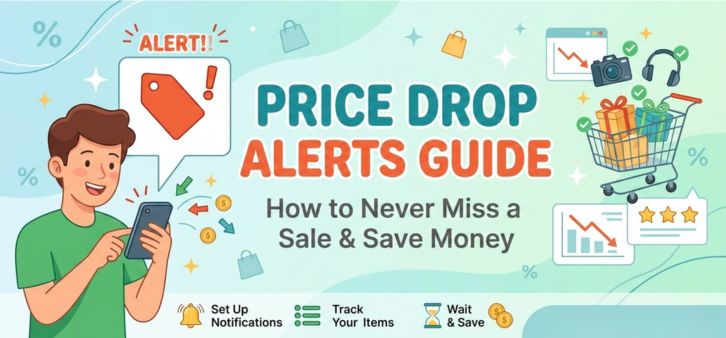
Online shopping has transformed the way we buy products. With thousands of deals appearing every day across multiple e-commerce platforms, it becomes difficult to identify the best possible price at the right moment. Smart shoppers no longer rely on luck; they rely on price drop alerts. These powerful tools track product prices automatically and notify users the moment a product becomes cheaper.
In this comprehensive guide, we explore how price drop alerts work, why they are essential for modern shoppers, and how you can use them strategically to maximize savings. By leveraging advanced tracking systems and smart shopping techniques, anyone can ensure they never overpay again.
What Are Price Drop Alerts and Why They Matter
Price drop alerts are automated notifications that inform shoppers when the price of a product decreases. These alerts are generated by price monitoring algorithms that track product prices across different online marketplaces.
Instead of checking prices manually every day, shoppers can simply set a price tracking alert and receive instant updates when discounts appear.
Key Benefits of Price Drop Alerts
-
Instant notifications when a product price decreases
-
Automatic tracking of price changes across multiple stores
-
Better purchase timing to buy products at the lowest price
-
Avoid paying full price for items that frequently go on sale
-
Track multiple products simultaneously
Price alerts empower shoppers to make data-driven purchase decisions rather than impulsive ones.
How Price Drop Alerts Work
Price drop alert systems rely on automated monitoring technology. These systems constantly scan product pages and detect price changes.
The Process of Price Monitoring
-
Product Selection
The user selects the product they want to track. -
Price Tracking System Activation
The system records the current price of the product. -
Continuous Monitoring
Automated bots monitor the product page multiple times daily. -
Price Comparison Algorithm
The system compares the latest price with the previously recorded price. -
Notification Trigger
When a price drop occurs, users receive alerts via email, push notification, or app notification.
This process ensures that shoppers receive real-time price updates without needing to constantly monitor products manually.
Why Smart Shoppers Use Price Tracking Tools
Modern consumers understand that product prices fluctuate frequently. Retailers adjust prices due to competition, inventory changes, seasonal promotions, and marketing campaigns.
Using price alerts allows shoppers to capitalize on these fluctuations.
Major Reasons to Use Price Drop Alerts
-
Retailers often lower prices unexpectedly
-
Seasonal sales may temporarily reduce product prices
-
Limited-time deals appear without warning
-
Prices vary between different e-commerce platforms
Price tracking tools help shoppers identify the best purchasing window.
Types of Price Drop Alerts
Price alert systems come in several forms depending on how notifications are delivered.
1. Email Price Alerts
Email alerts notify users when a product price decreases.
Advantages
-
Easy to track notifications
-
Works without installing apps
-
Suitable for occasional shoppers
2. Mobile App Notifications
Many deal-tracking apps send push notifications instantly when a price drop occurs.
Advantages
-
Real-time alerts
-
Faster notification delivery
-
Integrated with shopping platforms
3. Browser Extension Alerts
Browser extensions track prices while users browse online stores.
Advantages
-
Automatically monitors products
-
Shows price history
-
Detects better deals instantly
4. Website-Based Price Tracking
Some platforms allow users to create watchlists of products directly on the website.
Advantages
-
Track multiple items
-
Manage alerts easily
-
Access historical price charts
Best Products to Track Using Price Alerts
Certain product categories experience frequent price fluctuations, making them ideal for price tracking.
Electronics
Electronics prices often change due to new product launches and seasonal promotions.
Examples include:
-
Smartphones
-
Laptops
-
Smart TVs
-
Cameras
-
Gaming consoles
Home Appliances
Appliances frequently receive discounts during major sales events.
Examples include:
-
Refrigerators
-
Washing machines
-
Air conditioners
-
Microwave ovens
-
Vacuum cleaners
Fashion and Apparel
Clothing brands frequently adjust prices based on inventory clearance and seasonal trends.
Examples include:
-
Shoes
-
Jackets
-
Sportswear
-
Designer apparel
Baby Products
Parents can benefit from price tracking for high-demand baby essentials.
Examples include:
-
Baby strollers
-
Diapers
-
Baby monitors
-
Feeding accessories
When Prices Drop the Most
Understanding price drop patterns helps shoppers plan purchases strategically.
Major Sale Periods
| Sale Event | Typical Discount Range |
|---|---|
| Black Friday | 30% – 70% |
| Cyber Monday | 25% – 60% |
| Seasonal Clearance | 20% – 50% |
| Holiday Promotions | 15% – 40% |
| Flash Sales | 10% – 60% |
During these periods, price tracking alerts become extremely valuable because prices change rapidly.
Advanced Strategies for Using Price Alerts
Simply setting a price alert is helpful, but combining alerts with smart strategies can significantly increase savings.
1. Track Multiple Retailers
Prices often vary across different platforms. Tracking the same product across multiple stores ensures the lowest available price.
2. Monitor Historical Price Trends
Some platforms provide price history graphs, helping users determine whether the current price is truly a good deal.
3. Set Target Price Alerts
Instead of waiting for any discount, users can set a specific price target.
Example:
-
Current price: $500
-
Target price alert: $420
The system notifies users when the price reaches the desired purchase point.
4. Combine Alerts With Coupons
When a price drop occurs, applying a coupon can result in double savings.
5. Monitor Competitor Price Drops
Retailers often match competitor prices. When one store lowers a price, others frequently follow.
Common Mistakes When Using Price Alerts
Many shoppers use price alerts incorrectly and miss potential savings.
Mistake 1: Waiting Too Long
Prices sometimes drop briefly and return to normal quickly.
Mistake 2: Ignoring Flash Deals
Flash deals may last only a few hours.
Mistake 3: Tracking Only One Store
Tracking a single retailer limits savings opportunities.
Mistake 4: Not Checking Shipping Costs
A lower price may include higher shipping fees.
Avoiding these mistakes helps ensure maximum savings from price alerts.
Benefits of Automated Price Monitoring Platforms
Advanced deal platforms provide features beyond simple alerts.
Powerful Features Include
-
AI-driven price tracking
-
Price history analysis
-
Multi-store comparison
-
Personalized deal recommendations
-
Mobile push alerts
These tools transform shopping into a strategic savings experience.
How Price Alerts Improve Smart Shopping
Price alerts help consumers make informed purchasing decisions rather than impulsive ones.
Major Advantages
-
Avoid buying products at peak prices
-
Receive alerts for hidden deals
-
Compare prices across stores instantly
-
Track products for weeks or months
With consistent monitoring, shoppers can save hundreds of dollars every year.
Future of Price Drop Alerts
Technology continues to enhance price tracking systems.
Emerging Innovations
-
AI-based price prediction models
-
Automated purchase recommendations
-
Voice assistant integration
-
Smart shopping dashboards
These technologies will make it even easier for shoppers to buy products at the lowest possible price.
FAQs
1. What is a price drop alert?
A price drop alert is a notification that informs shoppers when a product becomes cheaper online.
2. How do price tracking tools monitor product prices?
They use automated algorithms that scan product pages and detect price changes.
3. Are price drop alerts free to use?
Most platforms offer free price tracking features, while some provide advanced premium tools.
4. Can I track multiple products at the same time?
Yes. Most price tracking systems allow users to monitor multiple products simultaneously.
5. How often do price tracking systems update prices?
Many systems check prices several times per day.
6. Which products benefit most from price alerts?
Products with frequent discounts, such as electronics and appliances.
7. Can price alerts track multiple stores?
Yes. Many platforms monitor prices across several retailers.
8. Do price alerts work on mobile phones?
Yes. Many apps provide push notifications on smartphones.
9. Are price alerts accurate?
Most systems provide highly accurate real-time tracking.
10. Do retailers change prices frequently?
Yes. Prices may change daily or even hourly.
11. Can I set a target price for alerts?
Yes. Many tools allow users to set a desired purchase price.
12. Do price alerts include coupons?
Some platforms combine price drops with coupon alerts.
13. Are price alerts useful during big sales?
Yes. They help detect flash discounts and hidden deals.
14. Can price alerts track international stores?
Some platforms track global marketplaces.
15. How long should I track a product before buying?
Tracking for 1–3 weeks often reveals price trends.
16. Do price alerts track shipping costs?
Some advanced systems include shipping cost comparisons.
17. Can price alerts predict future discounts?
Certain tools analyze historical price data to estimate trends.
18. Are browser extensions useful for price tracking?
Yes. They automatically detect better deals while browsing.
19. Do price alerts help with flash sales?
Yes. Instant notifications help capture short-term deals.
20. Can price alerts save money on electronics?
Yes. Electronics often experience significant price fluctuations.
21. Are price alerts safe to use?
Trusted platforms use secure tracking systems.
22. Do price alerts work for fashion products?
Yes. Clothing prices often change due to seasonal sales.
23. Can businesses use price alerts for market research?
Yes. Companies use them to monitor competitor pricing strategies.
24. Are price alerts suitable for everyday shoppers?
Yes. Anyone shopping online can benefit from automated price tracking.
25. What is the best way to maximize savings with price alerts?
-
Track multiple stores
-
Set target price alerts
-
Combine alerts with coupons
-
Monitor historical price trends
For more information and to start using Roobae.com, visit our official website and download the app to stay updated on the best deals and offers. With roobae.com, you can ensure that every shopping experience is not just an opportunity to shop but an opportunity to save big