
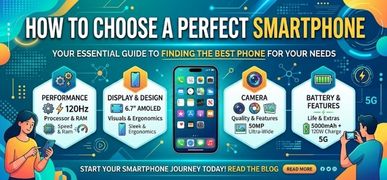
Smartphones have evolved into powerful digital tools that combine communication, productivity, photography, entertainment, and artificial intelligence into a single device. With hundreds of models available across multiple brands, selecting the perfect smartphone requires careful evaluation of performance, camera capabilities, battery life, display technology, and long-term reliability.
In this comprehensive guide, we outline exactly how to choose the perfect smartphone, highlighting the most critical features and specifications that determine real-world performance. By understanding these factors, we can confidently select a smartphone that delivers exceptional value, performance, and longevity.
Understanding Your Smartphone Needs Before Buying
Before comparing devices, we must clearly define how the smartphone will be used daily. Different users prioritize different capabilities, and selecting the right device begins with identifying the primary purpose.
Common Smartphone Usage Categories
-
Photography and videography
-
Gaming and performance-heavy applications
-
Business productivity
-
Social media and content creation
-
Travel and everyday communication
Choosing the perfect smartphone becomes easier when we match the device specifications with the user's lifestyle and requirements.
Key Factors to Consider When Choosing the Perfect Smartphone
Selecting the right smartphone involves evaluating several core hardware and software components that directly influence performance, user experience, and device longevity.
1. Smartphone Processor – The Core of Performance
The processor, also known as the chipset, determines how fast and efficiently a smartphone performs tasks.
Modern smartphones are powered by advanced processors such as:
-
Qualcomm Snapdragon series
-
Apple A-series chips
-
MediaTek Dimensity processors
-
Samsung Exynos processors
What to Look for in a Processor
-
Multi-core architecture
-
AI processing capabilities
-
Efficient power management
-
High GPU performance for gaming
A powerful processor ensures smooth multitasking, faster app launches, improved gaming performance, and efficient battery usage.
2. RAM and Storage – Ensuring Smooth Multitasking
RAM plays a crucial role in how many apps can run simultaneously without slowing down the device.
Recommended RAM for Smartphones
| Usage Type | Recommended RAM |
|---|---|
| Basic usage | 4GB |
| Moderate multitasking | 6GB |
| Gaming & heavy apps | 8GB – 12GB |
| Professional usage | 12GB – 16GB |
Internal Storage Options
-
128GB – Standard everyday usage
-
256GB – Ideal for photos and videos
-
512GB or higher – Best for content creators
More storage allows us to store high-resolution photos, videos, games, and productivity files without performance limitations.
3. Display Technology – Visual Experience Matters
The smartphone display is one of the most important elements influencing the overall user experience.
Popular Smartphone Display Types
-
LCD Displays
-
OLED Displays
-
AMOLED Displays
-
LTPO AMOLED Displays
Among these, AMOLED and OLED displays offer the best visual performance, delivering vibrant colors, deeper blacks, and better energy efficiency.
Important Display Features
-
Refresh rate (90Hz, 120Hz, 144Hz)
-
High brightness levels
-
HDR10+ support
-
Corning Gorilla Glass protection
A high refresh rate ensures smoother scrolling, improved gaming responsiveness, and a premium viewing experience.
4. Smartphone Camera – Capturing Professional Photos
Modern smartphones now rival professional cameras in many scenarios. Choosing a device with a powerful camera system is essential for photography enthusiasts and content creators.
Key Camera Features to Consider
-
High-resolution sensors (50MP, 64MP, 108MP, 200MP)
-
Optical Image Stabilization (OIS)
-
Ultra-wide and telephoto lenses
-
Night photography capabilities
-
AI scene optimization
Camera Setup Types
| Camera Type | Purpose |
|---|---|
| Wide camera | Main photography |
| Ultra-wide camera | Landscape and group photos |
| Telephoto lens | Zoom photography |
| Macro lens | Close-up photography |
The best smartphone cameras combine advanced sensors, powerful image processing, and intelligent AI software.
5. Battery Capacity and Charging Speed
Battery performance determines how long a smartphone lasts during daily use.
Typical Battery Capacities
-
4000mAh – Moderate usage
-
4500mAh – Balanced performance
-
5000mAh – Heavy users
-
6000mAh – Gaming and power users
Charging Technologies
-
Fast charging (30W – 120W)
-
Wireless charging
-
Reverse wireless charging
Fast charging allows smartphones to reach 50% battery in less than 20 minutes, significantly improving convenience.
6. Operating System and Software Experience
The operating system determines the overall interface, app compatibility, and software updates.
Two Major Smartphone Operating Systems
Android
-
Customizable interface
-
Wide range of devices
-
Flexible app ecosystem
iOS
-
Optimized performance
-
Long-term software updates
-
Strong ecosystem integration
Choosing between Android and iOS depends on personal preference and ecosystem compatibility.
7. Build Quality and Durability
Premium smartphones feature high-quality materials and durable construction.
Common Smartphone Materials
-
Aluminum frames
-
Glass back panels
-
Ceramic finishes
-
Titanium frames in flagship models
Durability Features
-
IP68 water resistance
-
Dust protection
-
Scratch-resistant glass
Durable materials ensure long-term reliability and protection from everyday wear and tear.
8. Connectivity and Network Technology
Modern smartphones support advanced connectivity features that enhance speed and usability.
Essential Connectivity Features
-
5G network compatibility
-
Wi-Fi 6 or Wi-Fi 7
-
Bluetooth 5.3
-
NFC for contactless payments
-
Dual SIM support
These features enable faster downloads, stable connections, and seamless device communication.
9. Security Features and Privacy Protection
Security has become an essential part of smartphone technology.
Popular Smartphone Security Features
-
Fingerprint scanners
-
Face recognition
-
Secure hardware encryption
-
Private data vaults
Advanced security features protect personal information, financial data, and digital identity.
10. Smartphone Brand Reputation and Support
Choosing a reliable brand ensures consistent performance, regular software updates, and reliable customer support.
Leading Smartphone Brands
-
Apple
-
Samsung
-
Google Pixel
-
OnePlus
-
Xiaomi
These brands consistently deliver high-quality devices with long-term software support.
Best Smartphones by Category
Best Flagship Smartphones
-
Apple iPhone 15 Pro Max
-
Samsung Galaxy S24 Ultra
-
Google Pixel 8 Pro
Best Mid-Range Smartphones
-
Samsung Galaxy A55
-
Google Pixel 7a
-
OnePlus Nord 3
Best Budget Smartphones
-
Xiaomi Redmi Note Series
-
Realme Narzo Series
-
Samsung Galaxy A Series
Smartphone Comparison Table
| Feature | Budget Smartphone | Mid-Range Smartphone | Flagship Smartphone |
|---|---|---|---|
| Processor | Basic chipset | Balanced performance | Premium flagship chipset |
| Camera | 48MP | 64MP – 108MP | Advanced multi-camera |
| Display | LCD | AMOLED | LTPO AMOLED |
| RAM | 4GB – 6GB | 8GB | 12GB – 16GB |
| Battery | 4000–5000mAh | 4500–5000mAh | 4500–5500mAh |
How to Choose the Perfect Smartphone for Different Users
For Photography Enthusiasts
Look for smartphones with:
-
Large camera sensors
-
Optical zoom lenses
-
Advanced night mode
For Mobile Gamers
Choose devices with:
-
Powerful processors
-
High refresh rate displays
-
Large batteries
For Business Professionals
Key features include:
-
Long battery life
-
Security features
-
Reliable performance
Smartphone Buying Tips for 2026
To ensure the best purchase decision, consider the following recommendations:
-
Always compare processor benchmarks
-
Choose at least 8GB RAM for long-term usage
-
Prefer AMOLED displays with high refresh rates
-
Check the number of software update years
-
Evaluate camera performance through real-world tests
These strategies help ensure that the smartphone remains fast, reliable, and relevant for several years.
Future Smartphone Trends
Smartphones continue to evolve rapidly with new innovations shaping the future of mobile technology.
Emerging Smartphone Innovations
-
AI-powered mobile assistants
-
Foldable and rollable displays
-
Satellite communication features
-
Advanced computational photography
-
Next-generation battery technology
These advancements will make smartphones even more powerful, efficient, and versatile.
Conclusion
Choosing the perfect smartphone requires balancing performance, camera quality, battery life, display technology, and software experience. By evaluating these essential factors carefully, we can confidently select a device that meets both current needs and future technological demands.
A well-chosen smartphone delivers seamless performance, exceptional photography, long-lasting battery life, and reliable connectivity, ensuring a premium digital experience every day.
FAQs
1. What is the most important feature when choosing a smartphone?
The most important features include:
-
Processor performance
-
Camera quality
-
Battery capacity
-
Display technology
2. How much RAM is ideal for a smartphone?
Recommended options:
-
6GB for moderate use
-
8GB for most users
-
12GB or more for gaming and professional use
3. Is a higher megapixel camera always better?
No. Image quality also depends on:
-
Sensor size
-
Image processing
-
Lens quality
4. What battery capacity is best for smartphones?
5000mAh batteries provide the best balance between performance and longevity.
5. Are AMOLED displays better than LCD?
Yes, AMOLED displays offer:
-
Better contrast
-
Deeper blacks
-
Lower power consumption
6. What processor is best for smartphones?
Top processors include:
-
Snapdragon flagship chips
-
Apple A-series processors
-
MediaTek Dimensity premium processors
7. Should I buy a 5G smartphone?
Yes. 5G ensures faster internet speeds and future-proof connectivity.
8. Is wireless charging necessary?
Wireless charging provides convenience but is not essential.
9. What storage size should I choose?
Recommended storage options:
-
128GB minimum
-
256GB ideal
-
512GB for creators
10. Are foldable smartphones worth buying?
Foldable smartphones offer large screens and multitasking capabilities.
11. Which smartphone brand is most reliable?
Reliable brands include:
-
Apple
-
Samsung
-
Google
-
OnePlus
12. Do expensive smartphones last longer?
Flagship smartphones often receive longer software support and better hardware durability.
13. What refresh rate is best for a smartphone display?
A 120Hz refresh rate provides smooth scrolling and gaming performance.
14. Are gaming smartphones different from regular phones?
Yes. Gaming phones include:
-
Advanced cooling systems
-
Higher refresh rates
-
Powerful processors
15. How often should I upgrade my smartphone?
Most users upgrade every 2–3 years.
16. Do smartphones support external storage?
Some Android devices support microSD cards.
17. What is the best screen size for smartphones?
Most users prefer 6.1 to 6.7 inches.
18. Are budget smartphones good?
Yes. Many budget phones offer excellent value and performance.
19. How important is software support?
Regular updates improve security, performance, and longevity.
20. Are dual SIM smartphones useful?
Yes, especially for travel and business users.
21. What is reverse wireless charging?
It allows a smartphone to charge other devices wirelessly.
22. What is HDR in smartphone displays?
HDR enhances brightness, contrast, and color accuracy.
23. Do smartphones support desktop modes?
Some models support desktop-style productivity modes.
24. Are smartphone cameras replacing professional cameras?
Smartphones now deliver exceptional photography performance, especially for everyday use.
25. What is the best smartphone overall?
Top recommendations include:
-
iPhone 15 Pro Max
-
Samsung Galaxy S24 Ultra
-
Google Pixel 8 Pro
For more information and to start using Roobae.com, visit our official website and download the app to stay updated on the best deals and offers. With Roobae.com, you can ensure that every shopping experience is not just an opportunity to shop but an opportunity to save big.