
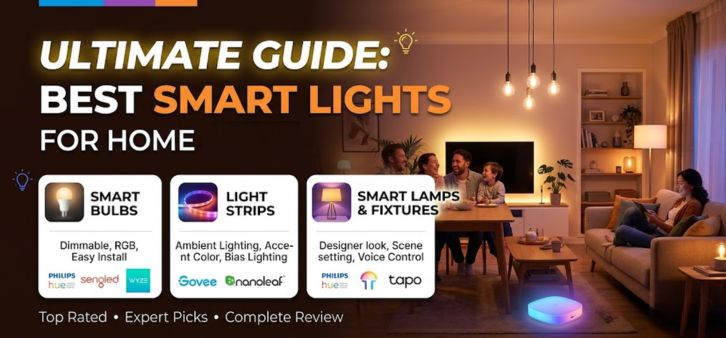
In today’s rapidly evolving world of connected living, smart lighting systems have emerged as one of the most transformative upgrades for modern homes. We are no longer confined to simple on/off switches—intelligent lighting now enables full control over ambiance, energy consumption, security, and even emotional well-being. This comprehensive guide explores the best smart lights for home in 2026, delivering unmatched insights, comparisons, and expert recommendations to help you build a truly future-ready smart home lighting ecosystem.
Why Smart Lighting is Essential for Modern Homes
Smart lighting is not just about convenience—it represents a fundamental shift in how we interact with our living spaces. With the integration of AI, IoT, and voice assistants, lighting becomes adaptive, responsive, and personalized.
Key Advantages of Smart Lights
-
Energy Efficiency: Reduce electricity consumption with automation and scheduling
-
Remote Access: Control lights from anywhere using mobile apps
-
Voice Control: Seamless integration with Alexa, Google Assistant, and Siri
-
Customization: Millions of color options and brightness levels
-
Security Enhancement: Simulate presence while away
By adopting smart lighting solutions, we transform homes into intelligent environments that respond to our lifestyle.
Top Smart Lights for Home in 2026
1. Philips Hue Smart Lighting – The Gold Standard
When discussing premium smart lighting, Philips Hue continues to dominate the market with its unmatched ecosystem.
Features
-
Wide range: bulbs, light strips, outdoor lights
-
Supports 16 million colors
-
Works with all major smart home platforms
-
Advanced automation and scene creation
Why We Recommend It
Philips Hue delivers exceptional reliability, seamless connectivity, and industry-leading brightness quality, making it the top choice for users seeking a high-end smart lighting experience.
2. Wipro Smart LED Lights – Best for Indian Homes
Wipro has established itself as a trusted brand in India, offering affordable yet powerful smart lighting solutions.
Features
-
Budget-friendly pricing
-
Compatible with Alexa and Google Assistant
-
Easy installation with no hub required
-
Energy-efficient LED technology
Why We Recommend It
For users seeking cost-effective smart lighting without compromising essential features, Wipro delivers excellent value for money.
3. Syska Smart Lights – Affordable Innovation
Syska continues to innovate in the budget smart lighting segment, providing reliable options for beginners.
Features
-
Simple app-based control
-
Voice assistant compatibility
-
Multiple lighting modes
-
Low power consumption
Why We Recommend It
Syska is ideal for those entering the smart home ecosystem, offering ease of use and affordability.
4. Xiaomi Mi Smart LED Bulb – Smart Simplicity
Xiaomi’s smart lighting products emphasize minimalism and efficiency.
Features
-
No hub required
-
Adjustable brightness and color temperature
-
Integration with Mi Home app
-
Strong ecosystem compatibility
Why We Recommend It
Perfect for users who prefer simple, clean, and reliable smart lighting solutions without unnecessary complexity.
5. TP-Link Tapo Smart Lights – Best for Stability
TP-Link’s Tapo series delivers consistent performance and strong connectivity.
Features
-
Reliable Wi-Fi connection
-
App-based control
-
Scheduling and automation
-
No additional hub needed
Why We Recommend It
For users prioritizing stable connectivity and dependable performance, TP-Link Tapo stands out.
Types of Smart Lighting Solutions
Smart Bulbs
-
Replace traditional bulbs
-
Ideal for quick upgrades
-
Easy installation
Smart LED Strips
-
Perfect for ambient lighting
-
Popular for TVs, bedrooms, and gaming setups
Smart Ceiling Lights
-
Provide uniform room illumination
-
Advanced dimming and color features
Outdoor Smart Lights
-
Enhance security and aesthetics
-
Weather-resistant designs
How to Choose the Best Smart Lights for Your Home
Selecting the right smart lighting requires careful consideration of several factors:
1. Compatibility
Ensure the lights work with your preferred ecosystem:
-
Alexa
-
Google Home
-
Apple HomeKit
2. Connectivity Type
-
Wi-Fi (no hub required)
-
Zigbee (requires hub but more stable)
3. Brightness Levels
Measured in lumens:
-
Bedrooms: 400–800 lumens
-
Living rooms: 800–1600 lumens
4. Color Options
-
RGB for full color control
-
Tunable white for warmth adjustment
5. App Experience
A well-designed app ensures smooth control and customization.
Smart Lighting Automation Ideas
Morning Routine Automation
Lights gradually brighten to simulate sunrise, improving mood and productivity.
Movie Mode
Dim lights automatically when streaming content for a cinematic experience.
Away Mode
Lights turn on/off randomly to enhance security.
Sleep Mode
Warm, dim lighting helps improve sleep quality.
Installation and Setup Guide
Step-by-Step Process
-
Install the smart bulb
-
Download the brand’s mobile app
-
Connect to Wi-Fi
-
Pair with voice assistant
-
Customize settings and schedules
The setup process is typically quick, intuitive, and beginner-friendly.
Energy Efficiency and Cost Savings
Smart lighting significantly reduces energy usage through:
-
Automated scheduling
-
Motion detection
-
Adaptive brightness
Over time, users can achieve substantial savings on electricity bills, making smart lights a long-term investment.
Smart Lighting Trends in 2026
AI-Powered Lighting
Lights adapt based on behavior patterns and preferences.
Circadian Rhythm Lighting
Automatically adjusts color temperature throughout the day.
Integration with Smart Homes
Seamless connection with:
-
Smart thermostats
-
Security systems
-
Entertainment setups
Common Mistakes to Avoid
-
Buying incompatible devices
-
Ignoring brightness requirements
-
Overlooking app quality
-
Choosing poor connectivity options
Avoiding these ensures a smooth and efficient smart lighting experience.
Comparison Table: Best Smart Lights 2026
| Brand | Price Range | Hub Required | Voice Control | Best For |
|---|---|---|---|---|
| Philips Hue | High | Optional | Yes | Premium users |
| Wipro | Medium | No | Yes | Budget buyers |
| Syska | Low | No | Yes | Beginners |
| Xiaomi | Medium | No | Yes | Minimalists |
| TP-Link Tapo | Medium | No | Yes | Stability |
FAQs
1. What are smart lights?
Smart lights are internet-connected lighting devices that can be controlled remotely.
2. Do smart lights need Wi-Fi?
Most require Wi-Fi, while some use hubs like Zigbee.
3. Are smart lights energy efficient?
Yes, they consume less power than traditional bulbs.
4. Can I control smart lights with voice?
Yes, through Alexa, Google Assistant, and Siri.
5. Are smart lights expensive?
Prices vary from budget to premium.
6. Do smart lights work without internet?
Limited functionality may still work locally.
7. How long do smart bulbs last?
Typically 15,000–25,000 hours.
8. Can I use smart lights outdoors?
Yes, if they are weatherproof.
9. Do smart lights improve security?
Yes, through automation and scheduling.
10. Are smart lights safe?
Yes, when used with secure networks.
11. Can I dim smart lights?
Yes, most support dimming.
12. Do they support color changes?
Many offer RGB color options.
13. Are smart lights hard to install?
No, installation is simple.
14. Can multiple users control them?
Yes, via shared access.
15. Do smart lights work with smartphones?
Yes, through dedicated apps.
16. Can I automate lighting schedules?
Yes, easily.
17. What is a smart hub?
A device that connects multiple smart devices.
18. Do smart lights flicker?
Quality brands do not.
19. Can I use them in old fixtures?
Yes, most are compatible.
20. Do smart lights consume power when off?
Minimal standby power is used.
21. Are they worth buying?
Yes, for convenience and savings.
22. Can I control them remotely?
Yes, from anywhere.
23. Do they support scenes?
Yes, customizable lighting scenes.
24. Are smart lights durable?
Yes, with long lifespan.
25. Which brand is best?
Philips Hue is the top premium choice.
For more information and to start using Roobae.com, visit our official website and download the app to stay updated on the best deals and offers. With Roobae.com, you can ensure that every shopping experience is not just an opportunity to shop but an opportunity to save big