
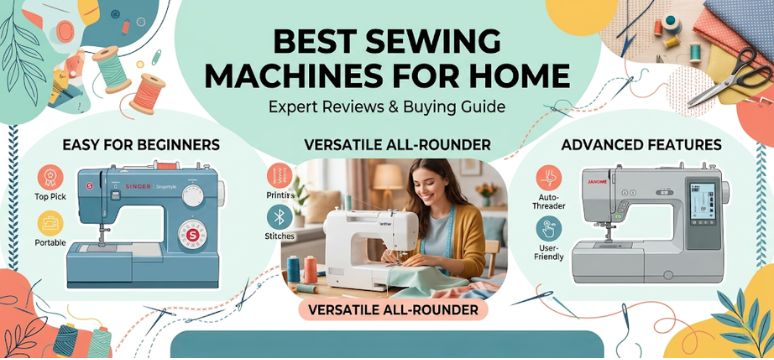
Sewing has evolved from a traditional household skill into a powerful form of creative expression, sustainable living, and home-based entrepreneurship. Whether you want to repair clothes, design custom garments, start a tailoring business, or simply explore a rewarding hobby, investing in the best sewing machine for home use is the most important step.
In this comprehensive guide, we explore the top sewing machines for home users, analyze essential features, compare different machine types, and provide expert recommendations to help you choose the perfect sewing machine for your needs.
Why Every Home Needs a Sewing Machine
A sewing machine is no longer just a tool for tailors. Modern households increasingly rely on home sewing machines for practical and creative purposes.
Key Benefits of Owning a Sewing Machine
-
Repair and alter clothes instantly
-
Save money on tailoring
-
Create custom garments
-
Design home décor like curtains, pillow covers, and quilts
-
Start a small home tailoring business
-
Practice sustainable fashion by reusing fabrics
With modern innovations such as automatic threading, computerized stitching, and smart controls, today's sewing machines are designed to be easy, efficient, and beginner-friendly.
Types of Sewing Machines for Home Use
Before choosing the best model, it is essential to understand the different types of sewing machines available.
1. Mechanical Sewing Machines
Mechanical sewing machines are manual machines with basic controls. They are ideal for beginners who want to learn the fundamentals.
Advantages
-
Affordable
-
Durable
-
Simple controls
-
Low maintenance
Best For
-
Beginners
-
Basic stitching
-
Home repairs
2. Electronic Sewing Machines
Electronic sewing machines include motor-assisted controls and automated features, making sewing smoother and faster.
Advantages
-
Speed control
-
Automatic needle positioning
-
More stitch options
-
Convenient operation
Best For
-
Intermediate users
-
Regular home sewing
-
Craft projects
3. Computerized Sewing Machines
Computerized machines represent the most advanced sewing technology, offering programmable stitches and digital displays.
Advantages
-
Hundreds of stitch patterns
-
Touchscreen interface
-
Automatic tension control
-
Memory functions
Best For
-
Professional home sewing
-
Fashion designers
-
Advanced sewing projects
Top Features to Look for in the Best Home Sewing Machine
Choosing the right sewing machine requires understanding the most important performance features.
1. Stitch Variety
The number of stitches determines how versatile your sewing projects can be.
Common stitch types include:
-
Straight stitch
-
Zigzag stitch
-
Decorative stitches
-
Stretch stitches
-
Buttonhole stitches
Machines with 30–100 stitch patterns are ideal for most home users.
2. Automatic Needle Threader
Threading a needle manually can be frustrating. Modern machines include automatic needle threaders that make setup effortless.
This feature:
-
Saves time
-
Reduces eye strain
-
Simplifies beginner use
3. Adjustable Stitch Length and Width
Adjustable settings allow you to customize stitch density and spacing, which is essential when working with different fabrics.
4. Sewing Speed Control
High-end sewing machines provide speed regulation, enabling users to sew delicate fabrics slowly and heavy materials quickly.
5. Built-In Lighting
LED lighting improves visibility when sewing dark fabrics or intricate designs.
6. Free Arm Capability
Free arm machines allow easy stitching of cuffs, sleeves, collars, and small circular garments.
Best Sewing Machines for Home Use in 2026
Below are some of the best sewing machines currently dominating the home sewing market.
1. Brother CS7000X Computerized Sewing Machine
The Brother CS7000X is widely recognized as one of the best computerized sewing machines for home users.
Key Features
-
70 built-in stitches
-
Automatic needle threader
-
LCD display
-
Wide table for quilting
-
Adjustable speed control
Why It Stands Out
This machine offers professional-level functionality while remaining beginner-friendly, making it a top choice for home sewing enthusiasts.
2. Singer Heavy Duty 4423 Sewing Machine
The Singer Heavy Duty 4423 is designed for power and durability, making it ideal for thick fabrics.
Key Features
-
1100 stitches per minute
-
Strong motor
-
Stainless steel bedplate
-
23 built-in stitches
-
Heavy-duty metal frame
Best For
-
Denim
-
Leather
-
Upholstery
-
Thick fabrics
3. Janome 2212 Sewing Machine
The Janome 2212 is a classic mechanical sewing machine known for simplicity and reliability.
Key Features
-
12 built-in stitches
-
Four-step buttonhole
-
Dial pattern selection
-
Easy threading system
Best For
-
Beginners
-
Basic sewing
-
Everyday repairs
4. Brother XM2701 Lightweight Sewing Machine
The Brother XM2701 is an excellent choice for beginners who want a portable and easy-to-use sewing machine.
Key Features
-
27 stitches
-
Automatic needle threader
-
Lightweight design
-
Free arm sewing
5. Singer Quantum Stylist 9960
For advanced users, the Singer Quantum Stylist 9960 offers exceptional features.
Key Features
-
600 stitch patterns
-
LCD screen
-
Automatic thread cutter
-
Extension table
This machine is ideal for serious sewing enthusiasts and home designers.
Comparison Table of Best Sewing Machines for Home
| Sewing Machine | Type | Built-In Stitches | Best For |
|---|---|---|---|
| Brother CS7000X | Computerized | 70 | Beginners to intermediate |
| Singer 4423 | Mechanical | 23 | Heavy fabrics |
| Janome 2212 | Mechanical | 12 | Beginners |
| Brother XM2701 | Mechanical | 27 | Lightweight sewing |
| Singer 9960 | Computerized | 600 | Advanced sewing |
How to Choose the Best Sewing Machine for Your Needs
Selecting the ideal machine depends on your sewing goals, skill level, and project types.
For Beginners
Choose machines with:
-
Automatic threading
-
Simple stitch selection
-
Lightweight design
-
Basic stitches
For Hobbyists
Look for:
-
Multiple stitch patterns
-
Adjustable speed
-
Free arm sewing
-
Extension tables
For Advanced Users
Consider machines offering:
-
Computerized controls
-
Hundreds of stitches
-
Quilting accessories
-
Memory settings
Best Sewing Machines for Different Fabric Types
Different fabrics require different sewing capabilities.
| Fabric Type | Recommended Machine Type |
|---|---|
| Cotton | Mechanical |
| Silk | Electronic |
| Denim | Heavy-duty |
| Leather | Industrial-style |
| Stretch fabric | Computerized |
Maintenance Tips for Sewing Machines
Proper maintenance ensures long-lasting performance and consistent stitch quality.
Essential Care Practices
-
Clean lint regularly
-
Oil moving parts
-
Replace needles frequently
-
Use high-quality thread
-
Cover the machine when not in use
Routine maintenance significantly improves machine durability and stitch precision.
Common Sewing Machine Accessories
Accessories expand your sewing capabilities.
Essential Accessories
-
Zipper foot
-
Buttonhole foot
-
Walking foot
-
Quilting guide
-
Seam ripper
These tools allow you to handle advanced sewing techniques and specialized projects.
Advantages of Modern Home Sewing Machines
Today's sewing machines include smart features that transform sewing into an effortless experience.
Modern Innovations
-
Automatic thread cutting
-
Digital stitch control
-
Built-in tutorials
-
USB pattern uploads
-
Touchscreen displays
These innovations make home sewing faster, easier, and more enjoyable.
Common Sewing Mistakes to Avoid
Even experienced sewers occasionally encounter issues.
Frequent Mistakes
-
Incorrect thread tension
-
Using the wrong needle
-
Skipping regular cleaning
-
Choosing unsuitable fabrics
Avoiding these mistakes ensures professional-quality results.
Why Sewing at Home Is Becoming Popular Again
Home sewing has experienced a strong resurgence due to:
-
DIY fashion trends
-
Sustainable clothing movement
-
Personalized garment design
-
Rising tailoring costs
A sewing machine empowers households to create, customize, and repair clothing with complete creative freedom.
Future of Home Sewing Machines
The next generation of sewing machines will include:
-
AI stitch optimization
-
Smart pattern recognition
-
Mobile app integration
-
Automated fabric detection
These innovations will further transform home sewing into a smart creative technology.
FAQs
1. What is the best sewing machine for beginners?
Brother XM2701 and Janome 2212 are excellent beginner machines.
2. Are computerized sewing machines better?
Yes, they provide more stitch options and automation.
3. How much should a home sewing machine cost?
Good machines range from $100 to $600 depending on features.
4. Can sewing machines handle denim?
Heavy-duty models like Singer 4423 can sew thick denim easily.
5. What is the lifespan of a sewing machine?
High-quality machines can last 10–25 years with proper maintenance.
6. Do sewing machines need oiling?
Yes, regular lubrication ensures smooth operation.
7. Which sewing machine brand is most reliable?
Brother, Singer, and Janome are among the most trusted brands.
8. Can beginners use computerized machines?
Yes, many models are designed specifically for beginners.
9. What needle should be used for cotton fabric?
Universal needles size 80/12 work best.
10. Is sewing difficult to learn?
With modern machines, sewing is easy and beginner-friendly.
11. What fabrics are hardest to sew?
Leather, silk, and stretchy fabrics require advanced techniques.
12. Do sewing machines consume much electricity?
No, they are energy-efficient appliances.
13. Can sewing machines stitch thick fabrics?
Heavy-duty machines are designed for thick layers.
14. How often should needles be replaced?
After every 8–10 hours of sewing.
15. What is a free arm sewing machine?
It allows sewing cylindrical garments like sleeves.
16. What stitch is most commonly used?
The straight stitch is the most widely used.
17. Are portable sewing machines reliable?
Yes, many lightweight models are powerful and durable.
18. Can sewing machines embroider?
Some computerized machines support basic embroidery.
19. What thread works best?
High-quality polyester thread is versatile.
20. Is quilting possible on home sewing machines?
Yes, especially machines with wide extension tables.
21. What accessories should beginners buy?
Zipper foot, seam ripper, measuring tape, and extra needles.
22. Can children learn sewing?
Yes, with supervision and beginner-friendly machines.
23. What is stitch tension?
It controls thread tightness during stitching.
24. Are metal frame machines better?
Yes, they are more stable and durable.
25. Is sewing a profitable home business?
Yes, tailoring and custom clothing can become profitable ventures.
For more information and to start using Roobae.com, visit our official website and download the app to stay updated on the best deals and offers. With Roobae.com, you can ensure that every shopping experience is not just an opportunity to shop but an opportunity to save big